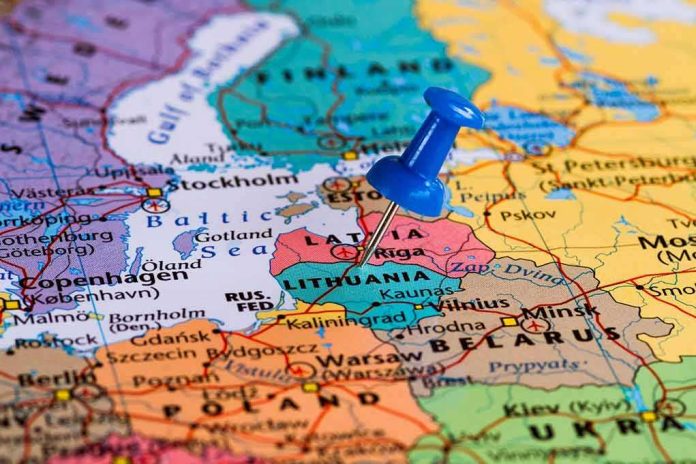
Moscow said out loud what many only imply: put allied nukes in Lithuania, and Russia will aim its own at Vilnius.
Story Snapshot
- Russia warned Lithuania it would aim nuclear forces at it if NATO weapons are hosted.
- Lithuania is moving to lift a constitutional ban that blocks nuclear deployments.
- Vilnius frames the change as deterrence, not a deployment order.
- The warning fits a long pattern of Russian nuclear red lines in the Baltics.
Kremlin draws a bright red line over NATO nuclear basing
Russia’s spokesman Dmitry Peskov said Lithuanian territory would “come into the sights” of Russia’s nuclear arsenal if it hosts nuclear weapons from allies. The remark answered Lithuania’s steps to clear legal barriers to nuclear-sharing under the North Atlantic Treaty Organization. Reuters carried the quote, which left little room for doubt about Moscow’s threshold. A separate wire report stated Russia would aim nuclear warheads at Lithuania under that scenario, underscoring the threat’s clarity.
The Russian message follows a familiar script. When a North Atlantic Treaty Organization state nears a posture shift, Moscow raises the stakes with nuclear talk. The goal is simple: make any allied move look reckless and costly. This is pressure politics, not a strategic secret. The Baltic region has seen this cycle for years. Russia signals with rhetoric and deployments around Kaliningrad. Allies answer by tightening plans and closing legal gaps.
Lithuania changes the rules so it can join deterrence fully
Lithuania’s leaders launched a constitutional change to remove a ban on weapons of mass destruction and foreign bases. The ban sits in Article 137 and blocks any nuclear-sharing plan, even as the country hosts allied forces and prepares for a German brigade. A legal panel vote advanced the proposal 7–2, moving the process toward final action next year if lawmakers and courts agree. The move changes legal options; it does not order nuclear weapons onto Lithuanian soil today.
President Gitanas Nausėda has said the aim is to join the West’s nuclear deterrent. That point is about credibility. If Russia thinks allied resolve is weak, miscalculation gets easier. Lithuanian officials say details are classified but confirm talks on a role in deterrence are active. That is normal for nuclear planning and does not prove any imminent deployment. It shows Vilnius wants to remove self-imposed limits that Moscow could exploit.
What the warning means, and what it does not
The Kremlin’s threat does not change a basic fact: any state that hosts nuclear arms becomes a target in war plans. Moscow said the quiet part aloud to raise the political cost in Lithuania and across the alliance. That message also tries to spook the public in other North Atlantic Treaty Organization capitals. Yet deterrence logic cuts both ways. If allies can forward-base or share nuclear roles, Russia must weigh greater risk before any move against a neighbor.
🇷🇺🇱🇹RUSSIA warns Lithuania over hosting west Nuclear weapons on its territory.
Lithuania is considering to change its constitution to lift a ban on Nuclear weapons and foreign military bases that has been in place since its independence in 1918.
Kremlin spokesperson Dmitry… pic.twitter.com/zREOY5nfvf
— Global Surveillance (@Globalsurv) September 11, 2026
American conservative instincts ask two questions: does this strengthen peace, and who draws the line first? Removing a legal ban increases options at a time of open threats. That aligns with peace through strength. Moscow’s nuclear talk seeks to veto allied choices. Free nations should not let an autocrat set their laws by threat. A measured, lawful path that keeps options ready and signals unity serves security better than fear-driven retreat.
How this likely plays out next
Expect Lithuania to keep moving the amendment through its parliament and courts. Expect continued Russian statements warning of “countermeasures.” Watch for allied consultations on nuclear roles, training, and infrastructure that stop short of deployment. This pattern narrows Russia’s room for intimidation while avoiding sudden leaps. The most important signal to Moscow is steady, predictable resolve rather than noise. That, more than any speech, reduces the odds of a crisis.
Sources:
rt.com, bssnews.net, voennoedelo.com, b92.net, hamerintel.com