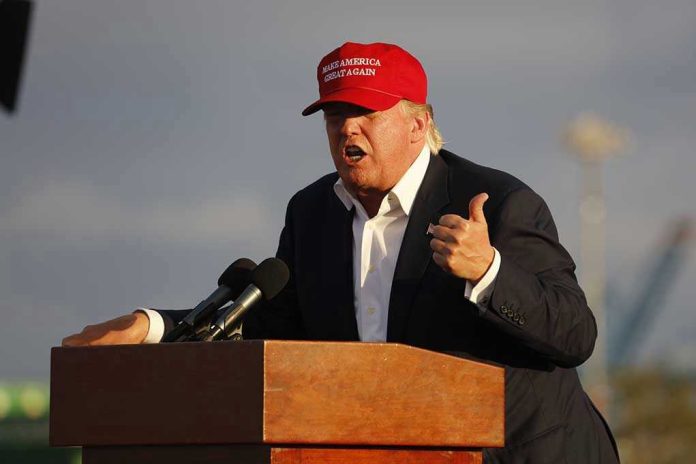
A new executive action has sparked a fierce legal battle as the Trump administration targets the U.S. Institute of Peace for dismantling.
Story Overview
- Trump administration attempts to dismantle the U.S. Institute of Peace.
- Legal and administrative conflicts arise from executive actions.
- Court rulings highlight tension between executive authority and congressional mandate.
- Significant impact on U.S. peacebuilding capacity and international reputation.
Trump Administration’s Bold Move on USIP
In February 2025, President Trump signed Executive Order 14217, initiating efforts to dismantle the U.S. Institute of Peace (USIP). The administration’s approach targeted this congressionally created independent nonprofit, aiming to reduce federal bureaucracy. This action resulted in a significant legal and administrative conflict, highlighting the ongoing tension between executive authority and congressional mandates.
On March 14, 2025, the administration fired 11 of the 15 USIP board members, leading to a lawsuit challenging the legality of these firings. The legal battle intensified as representatives from the Department of Government Efficiency (DOGE) gained access to the USIP headquarters. A federal court initially ruled in favor of USIP, declaring the board firings illegal. However, the D.C. Circuit Court of Appeals later reversed this decision, siding with the Trump administration.
Impact on U.S. Peacebuilding Efforts
The dismantling of USIP has significant implications for U.S. foreign policy and peacebuilding efforts. The organization, established under President Reagan, has played a crucial role in conflict prevention and resolution through research and education. The Trump administration’s actions raise questions about the limits of executive authority over independent agencies and their ability to carry out congressionally mandated missions.
The firing of board members and staff has disrupted USIP’s operations, leading to a leadership vacuum and uncertainty regarding control of the organization’s headquarters. This turmoil has affected staff morale and retention, potentially reducing U.S. engagement in international peacebuilding initiatives. The case sets a precedent for presidential authority over similar organizations, impacting their future independence.
Broader Implications and Expert Perspectives
Experts are divided on the legal and policy implications of the Trump administration’s actions. The D.C. Circuit Court’s ruling emphasized USIP’s role in foreign policy, justifying presidential control. However, USIP’s legal counsel argues that its independent nonprofit status should protect it from executive overreach. The Heritage Foundation’s criticisms of USIP reflect broader conservative concerns about federal agency accountability.
The Trump administration’s efforts to reduce the federal government have sparked debates about the balance of power between the executive branch and congressionally created entities. This case highlights the importance of preserving institutional independence while ensuring accountability and efficiency within the federal government.
Sources:
Wikipedia: United States Institute of Peace
OPB: Why Trump is Trying to Shut Down USIP