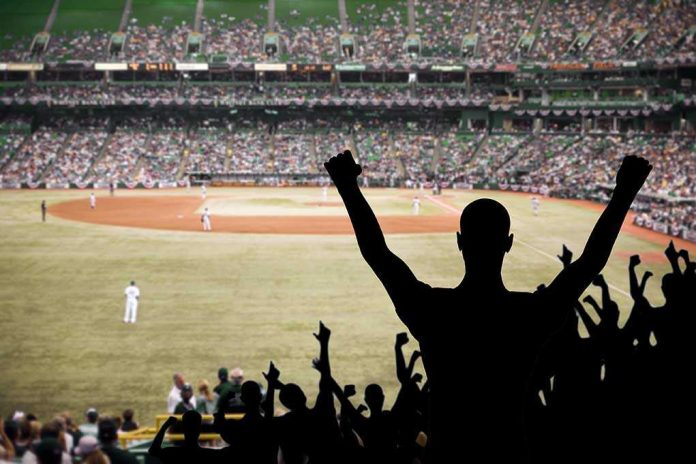
A slap during the national anthem at Wrigley Field turned a stadium ritual into a national Rorschach test about respect, rights, and the line between manners and the law.
Story Snapshot
- Viral video shows an older fan telling a younger man to stand, then slapping his head when he stayed seated.
- The younger fan stood right after the slap and stayed up through the anthem, then the older man said “Thank you”.
- Chicago Police say they are aware of the video, but no report is filed, so no action yet.
- Legal definitions suggest the slap can meet the standard for battery, no matter the motive.
What the video shows, and what it does not
The clip captures a direct demand, a refusal, and a slap. The older fan tells the seated man to get up during “The Star-Spangled Banner.” The younger man remains seated. The older fan then smacks the back of his head. The younger man rises and stays on his feet for the rest of the song. The older man follows with “Thank you,” which frames his act as a correction, not a fight. The video does not show why the younger man stayed seated, or what happened before the camera rolled.
Chicago Police Department said they are aware of the video, but no one filed a report. Without a report, police will not open a case or take action. That leaves this as a cultural brawl, not a criminal one, at least for now. Onlookers in the clip react in real time, and at least one appears to object to the slap, showing how fast the crowd sensed a line had been crossed from social pressure to physical contact.
The legal line: intent vs. contact
United States law defines battery as intentional, harmful, or offensive contact without consent. The definition does not care whether the actor felt patriotic, annoyed, or noble. It focuses on the touch and the lack of consent. The slap, as shown, is physical, intentional, and without any sign of consent. That checks key boxes for battery. No clear self-defense claim appears on the tape. A court would not grade the slap on whether the anthem played in the background.
That legal frame challenges the “patriotic correction” claim. A person can hold strong views about flag etiquette and still break the law if they enforce those views with a hand, not words. The United States Flag Code gives guidance for anthem conduct but carries no penalty for noncompliance. Stadiums ask for respect, but they do not deputize fans to police other fans with force. The gap between custom and law is wide, and it exists for a reason.
Common sense, courtesy, and conservative instincts
Respect for the anthem and the flag sits deep in conservative culture. Many people see standing as basic gratitude to those who serve. That view deserves a hearing in a loud world. But limited government, rule of law, and personal responsibility also sit at the core of conservative thought. Those values warn against vigilante manners. If you can hit someone for sitting, then someone else can hit you for speaking. That is not order. That is license. Custom belongs to families and communities, not fists.
The older fan’s “Thank you” after the slap may show he saw himself as a coach, not a bully. But motive does not erase method. The young man stood. That result does not sanctify the means. Good ends do not fix bad tools. A better path is simple and stronger: ask once, explain why it matters to you, then let the person choose. If you still object, flag an usher. That keeps peace, honors the anthem, and avoids a court date.
Why this moment hit a nerve
Anthem disputes have flared for decades and surged since athletes began high-profile protests. Most conflicts stay verbal, and many end with a shrug and the start of the game. Physical enforcement by fellow fans is rare. That rarity is why this slap went viral and split reaction. Some viewers cheered a return to standards. Others saw a needless assault. Both can agree on one thing: a three-second choice changed the mood of a ballpark and the meaning of a song for everyone around them.
🚨 WRIGLEY FIELD INCIDENT!
A fan at a Chicago Cubs game was struck in the back of the head after refusing to stand for the US national anthem, igniting a massive debate online over patriotism vs. assault. Was this out of line? ⚾🇺🇸 pic.twitter.com/cu7HGlG5Qm
— Impact Index Daily (@IndexImpact) July 21, 2026
Policy at Wrigley Field lays out conduct rules and channels for complaints, but it does not assign fans the job of discipline. The fastest fix now is procedural, not performative. If the younger man files a report, police can document facts, names, and any injury. That clarity will replace guesswork with records. Until then, this story is a reminder: the anthem is a request, not a court order. Keep your hand over your heart, not on someone else’s head.
Sources:
redstate.com, dailymail.com, yardbarker.com, facebook.com, nypost.com