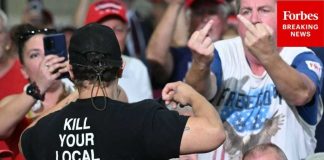
A man walked into a church for a rally and ended up in a Starbucks under a shower of blue paint.
Story Snapshot
- Activist Eoin Richard allegedly hosted a rally at Precious Blood Catholic Church in Los Angeles.
- Counter-protesters chased him into a Starbucks and doused him with blue paint, according to posts and reports.
- Clips show shouts of “Nazi” as tensions spilled from church grounds to the street.
- The church site is verified; official police records and neutral eyewitness accounts are not yet cited in available sources.
A Named Activist, A Real Church, And A Flashpoint
Accounts say activist Eoin Richard planned or hosted a free speech event with anti-Islam themes at Precious Blood Catholic Church in Los Angeles on August 23, 2026. The church exists at the stated address and runs an active parish, so the location check clears the first hurdle. The Gateway Pundit names Richard, places him at the church, and describes counter-protesters entering church space and disrupting the gathering before a chase to a nearby Starbucks. That sequence is the spine of the dispute right now.
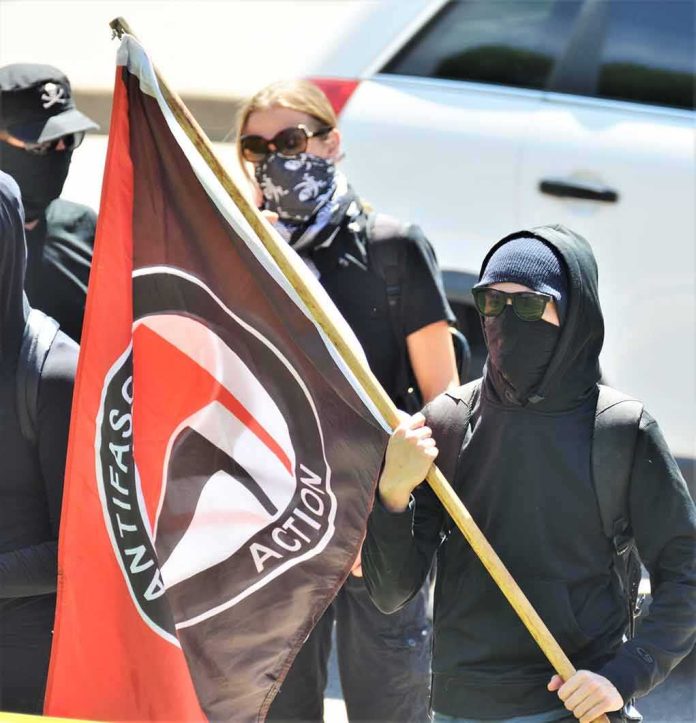
Social media posts on the same weekend echo the core points. One post states that “Antifa stormed Precious Blood Catholic Church,” chased Richard into Starbucks, assaulted him, and soaked him in blue paint. Another post claims Richard was thrown out and called a terrorist, framing the clash as a response to his alleged ties and rhetoric rather than an unprovoked attack. The labels are hot. The video clips, where shared, focus on the pursuit, the shouting, and the blue stain. The rest comes from captions and claims.
What We Can Say With Confidence, And What Needs Records
The church is real. The date window is consistent across posts and the article. The paint incident is described across multiple sources that agree on color, location shift, and the chase language. The leap from “counter-protesters” to “Antifa-linked” is an assertion in the reporting and posts, not proven membership data in the material provided. No police incident number, arrest list, or official statement appears in the current set. That silence does not erase the event; it limits what can be confirmed. Responsible reporting marks that line and waits for records.
Claims also mix names for the same person, referring to “Eoin Richard” and “Connolly,” which muddies verification. That kind of inconsistency is common in fast viral stories and often resolves when police reports, court filings, or formal statements land. Until then, stick to what matches across sources and keep the contested labels in quotes. Common sense says you do not need a party jersey to agree that dumping paint on someone crosses a line from protest to assault, even if prosecutors later decide not to charge.
How Clashes At Sacred Spaces Turn Ugly Fast
Faith sites add heat, symbolism, and media value. A rally with anti-Islam framing in a Catholic church sets a stage where both sides feel moral urgency. Research on protest flashpoints shows that weak trust, loose planning, and rapid countermobilization raise the odds of escalation, especially when police are distant or stretched. Once a crowd pursues a target off the original site, the chance of physical contact jumps. Loud labels like “Nazi” can function as permission slips for some in a crowd. That is not free speech; it is a fuse.
American conservative values draw a clear line here. People have the right to speak, even if you hate the words. People also have the right to worship without disruption. Crossing either boundary invites legal trouble and erodes the civic peace that lets neighbors argue without fear. If Richard trespassed, police can handle it. If counter-protesters chased and assaulted him with paint, the law should handle that too. Equal treatment is not a slogan; it is the social contract.
What Would Settle This, Fast
Two things would shift this from fog to facts. First, an incident report from the Los Angeles Police Department with a call-for-service log, officer narratives, and any body camera references for the time near the church and the Starbucks. Second, on-record statements from parish staff and Starbucks workers who saw the pursuit. Clear video from before the chase would also help define who started what, and when. Until then, the best reading is this: a real place, a named figure, a chase, and blue paint on camera-linked claims.
Sources:
thegatewaypundit.com, x.com, abc7news.com, reddit.com