
A head nod on a Florida sidewalk just lit a fuse under the fight over third‑country deportations.
Story Snapshot
- Hakeem Jeffries appeared to nod when asked if Democrats would bring back people deported to Africa
- Courts have questioned the policy’s due‑process steps, raising stakes for any reversal
- Democrats have opposed more money for aggressive enforcement under the current framework
- Homeland Security defends third‑country removals as a necessary public‑safety tool
The Sidewalk Moment That Sparked A Bigger Question
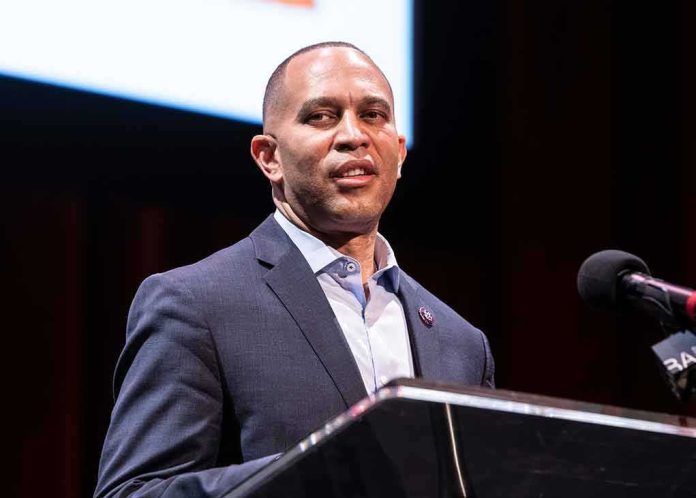
House Democratic Leader Hakeem Jeffries fielded a fast question in Florida. A reporter asked whether a Democratic Congress would bring back people deported to third countries, like those sent to parts of Africa. The Gateway Pundit reported that Jeffries nodded several times and said, “We do.” The clip spread fast on social media. The post that shared it even noted he did not say the word “yes” out loud, which kept debate alive about intent and scope.
That brief exchange hit a live wire because it sits on top of a much larger dispute. Federal appeals judges have said parts of the process broke due‑process rules. They pointed to weak notice and a lack of a real chance to explain fear of transfer. That legal pressure could force changes and even new hearings. It does not, by itself, order mass returns of everyone already sent abroad.
What Democrats Have Actually Said And Done So Far
Jeffries has blasted what he calls an “extreme immigration enforcement” push. He says policy should be fair, just, and humane. He has also taken a budget stance. He opposed a Republican plan that would send about $70 billion more to immigration enforcement and said Democrats would not back it. That is a funding signal, not a blueprint for flying deported people back to the United States.
Democratic critics also target oversight and cost. Reporting has raised questions about a program described as costing hundreds of millions of dollars and running with limited public detail. Senator Jeanne Shaheen called it “costly, wasteful and poorly monitored,” and she urged serious scrutiny. That line of attack frames the issue as both moral and fiscal stewardship. It resonates with voters who expect clear results for every dollar spent.
Why Third‑Country Removals Exist In The First Place
Homeland Security leaders defend the tool as essential when home countries refuse to take someone back, when return would not be safe, or when logistics break down. They say the State Department obtains diplomatic assurances from receiving countries that the person will not face persecution or torture. Officials describe the policy as key for removing the hardest cases, including violent offenders with final removal orders.
That defense leans on a simple premise most Americans accept: a sovereign nation enforces its laws. If a person has a final order, the government must act. Conservative common sense asks for two things at once. First, follow the law and keep the public safe. Second, honor due process for each person, because sloppy process creates loopholes, lawsuits, and higher costs later.
What The Courts Actually Changed
A federal appeals court ruling shook the ground under the program. Judges found that the process denied many people clear notice and a real chance to raise fears about the third country. That is a procedural failure, not a full stop on removals. It points toward fixes: better notice, meaningful interviews, and case‑by‑case review. Any returns, if they occur, would likely follow individualized court orders or settlement terms, not a blanket amnesty.
🇺🇸✈️🌍 Deported to a country he'd never seen, then sent where a judge said he'd be in danger
📰 What happened
Moussa Diawara, 57, is from Mali and lived in the US for 25 years. He has no criminal record. He came to the US at 32 on a tourist visa and overstayed it. He married,… https://t.co/vrrkeTb39Q— Miss Lara B. 🏳️⚧️ (@RealLaraBridge) October 26, 2026
Human Rights Watch documented accounts of people sent to African nations after short or confused notices and without a real hearing. The group said the practice aimed to deter others by fear, which fuels calls for oversight and remedy. That record pressures Congress to demand data, set guardrails, and ensure that no one is shipped onward to danger after arrival in a third country.
Reading The Nod: Policy, Optics, Or Both?
The nod means less than a signed bill but more than nothing. It suggests political will to revisit cases harmed by bad process. It does not prove a plan to charter planes and repatriate everyone sent to Africa. Until Democrats file a bill, issue a white paper, or secure agency action, the practical path looks narrower: stop flawed transfers, fix notice and hearings, and review cases where courts say the process broke down.
The clean conservative path is clear. Keep third‑country removals for the few cases where they are lawful, safe, and clearly documented. Fix due‑process gaps so rulings do not boomerang. Demand a full ledger: costs, contracts, assurances, and outcomes. If a court says a person was denied basic rights, honor the ruling with a targeted remedy. That approach protects borders, respects the Constitution, and avoids blank checks.
Sources:
thegatewaypundit.com, fatelephant.com, theafricareport.com, npr.org, jeffries.house.gov, abcnews.com, apnews.com, washingtonpost.com