
A blaze raced through Hitler’s Eagle’s Nest and left the mountaintop landmark almost entirely destroyed, with Bavarian police investigating suspected arson and a 33-year-old German man under judicial psychiatric detention.
Story Snapshot
- Police are probing suspected arson after the Kehlsteinhaus burned on October 23.
- Officers detained a 33-year-old German citizen from Berlin near the scene.
- Authorities say the building was largely destroyed by the fast-moving fire.
- Independent outlets confirmed the arrest and investigation underway.
What Happened On The Mountain
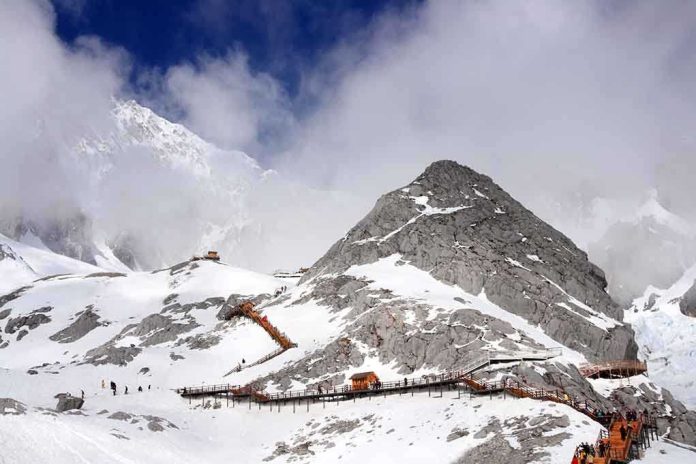
Bavarian police received a fire alarm at about 9:15 p.m. on Friday, October 23, for the Kehlsteinhaus above Berchtesgaden in the Bavarian Alps. Crews reached the mountain site as flames spread through the historic guest house. Police reported the structure was largely destroyed and later said it had burned down almost completely. The Kehlsteinhaus, known as the Eagle’s Nest, sits on the Kehlstein peak and draws heavy tourist traffic each season for its views and history.
Officers detained a suspicious person on a motorcycle near the site at about 9:45 p.m., within a half hour of the alarm. Police identified him as a 33-year-old German citizen who lives in Berlin. Authorities placed him under provisional psychiatric detention based on a judge’s order related to a suspected arson offense. Reporters from British and American outlets confirmed the arrest and the opening of a criminal inquiry into suspected arson that same weekend.
Why Officials Suspect Arson
Police stated they are investigating on suspicion of arson, a standard step when a fire consumes a building of this size and speed. The degree of destruction they described aligns with a major, rapidly spreading blaze rather than a minor incident. Investigators have not publicly detailed an ignition point, a fuel source, or lab results. They have also not named a motive. One brief caveat is appropriate: an arrest and provisional detention signal urgent suspicion, not a final finding of guilt.
Independent reporting mirrors these limits. Major outlets noted the arrest and the arson probe, while also saying investigators were still determining the cause and any motive. That measured approach respects due process. It also protects the integrity of the case, which must rest on evidence, not on symbolism or headlines prepared for speed more than accuracy.
The Site, The Symbol, And The Stakes
The Eagle’s Nest anchors a powerful mix of history and tourism. Built as a Nazi-era guest house, the site later became a well-known stop for visitors who come for alpine views and to confront the past. Popular culture reinforced the site’s image, including portrayals linked to Allied advances in the region at the end of World War II. Media coverage after the fire reflects this pull, but the work on the ground remains the same: secure the scene, find the origin, and prove the cause with facts a court can test.
American conservative values align with that order. Punish the person who did it if the evidence meets the bar. Protect property and heritage by hardening sites against copycat crimes. Resist moral grandstanding that uses a crime scene as a stage. A society that enforces the law without fear or favor keeps faith with victims, with history, and with future visitors who expect to see the truth, not a curated myth.
What Comes Next: Evidence, Not Emotion
Investigators will map fire patterns, examine electrical systems, and test debris for accelerants. They will review any camera footage, radio logs, and witness statements. They will check the suspect’s movements and communications to build or break the chain that links presence to action. Prosecutors will test whether the facts support intent, opportunity, and means. If the case holds, a court will decide the rest. If it does not, officials will say so and adjust.
By GEIR MOULSON BERLIN (AP) — A fire swept through the mountaintop retreat built for Adolf Hitler and known as the Eagle’s Nest as emergency services struggled to tackle the blaze in snow and wind, and a man was arrested on suspicion of arso… https://t.co/CrsEkQfoRv
— Capital Gazette (@capgaznews) October 24, 2026
Local leaders will face two fronts. First, recovery and safety: stabilize the site, prevent collapse risks, and secure artifacts. Second, memory and tourism: decide whether to rebuild, interpret, or leave a scar that warns more than it welcomes. That choice is not simple. It weighs civic duty, market demand, and the sober lesson that history is best faced in daylight, not remade by fire. Whatever path they choose, facts must lead, not fury.
Sources:
airforcetimes.com, polizei.bayern.de, cnn.com