Voters in three states locked abortion protections into law while a viral chant captured how charged the fight has become.
Story Snapshot
- Nevada and Virginia approved constitutional abortion rights through fetal viability.
- Missouri voters blocked a proposed abortion ban, keeping existing protections.
- Idaho voters rejected an expansion of abortion access.
- Post-Dobbs trend holds: ballot wins on abortion outpace party-line gains.
What Voters Did, Not What They Said Online
Voters made concrete changes to law. Nevada and Virginia approved amendments that state a right to abortion through fetal viability, setting a clear legal boundary in their constitutions. Missouri voters rejected a measure that would have added a ban, leaving in place the current constitutional protections in that state. Idaho voters said no to a broader “reproductive decisions” right that would have expanded abortion access. These four decisions show a split, but the net effect expands access.
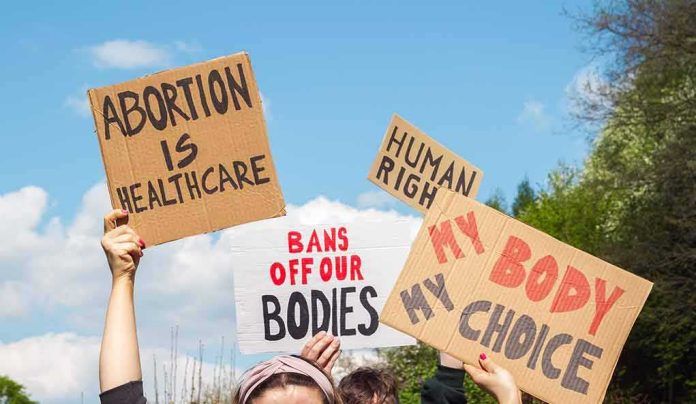
The political energy spilled onto social feeds, where a clip of young women cheering “Abortion is so back, baby!” drew praise on the left and outrage on the right. Advocacy outlets framed the chant as a sign of cultural decay, linking it to Democratic gains and ballot victories. The video became a shorthand for two very different readings of the same night: one side heard a win for bodily autonomy, the other heard a celebration of ending unborn life.
Why The Ballot Box Keeps Favoring Access
Since the Supreme Court’s Dobbs ruling, abortion rights have tended to win when presented as a direct question to voters. In 2024, seven of ten abortion-rights measures passed; in 2026, voters again backed access in most states with the issue on the ballot. Researchers tracking dozens of initiatives report a similar pattern across cycles: broad electorates often choose to keep or expand access when they vote on the policy itself. The 2026 map fits that base rate.
That does not mean every voter switched parties. Careful post-election work shows a split personality in American politics on this issue. Voters who back abortion rights on a measure may still choose a Republican for other reasons, or vice versa. Analyses of 2022 and 2024 elections found that abortion measures helped one party in one cycle and the other party in the next, hinting at cross-pressures and ticket-splitting rather than a clean, national realignment. The 2026 results continue that mix-and-match trend.
How Viability Became The New Legal North Star
“Through fetal viability” keeps showing up in these amendments for a reason. Many voters see it as a line that balances a woman’s choice early in pregnancy with later limits many find reasonable. Nevada’s language followed that model, and Virginia joined that track this year. Supporters say this gives doctors clear guidance and shields patients from criminal risk. Opponents argue viability is vague and movable, and that moral value does not hinge on weeks or medical technology.
Culture Wars Won’t Save the GOP
Abortion has lost most of its political salience. That will never happen to economic issues.
The problem with culture wars is that someone eventually wins. That is among the biggest challenges facing Republicans after Tuesday’s midterm… pic.twitter.com/OkxJsnZWxL
— American Politic (@rosewdc) November 6, 2026
Missouri’s result shows how language matters. The proposal sought to reverse existing protections with a ban, and voters turned it down. That left the state’s right to abortion in place. Idaho moved the other way, rejecting a sweep that folded in contraception, fertility treatment, and abortion under one broad right. Voters proved willing to read the fine print and split their tickets based on the details, not just party cues.
Culture Clash Meets Kitchen-Table Politics
The viral chant lit a fire, but the durable force is quieter: voters want to decide this issue close to home. That is not new. Direct democracy has long let people carve policy that fits local values. The data shows money and messaging help, but neither guarantees a win; clarity of scope and trust in medical judgment often carry the day. Common sense says most Americans resist absolutes. They dislike cruelty in law and chaos in care. They also expect limits when a pregnancy advances.
Expect both parties to read the tea leaves the same way: abortion, as a policy question, keeps winning on ballots, but candidates win by talking to broader concerns. Crime, prices, schools, and the border still decide many races. This cycle’s abortion results add guardrails in key states and keep the issue energized, yet they stop short of refashioning the whole electorate. That is the lesson since Dobbs, and 2026 stamped it again.
Sources:
lifesitenews.com, apnews.com, wusf.org, thecut.com, kff.org, nbcnews.com