A $2,500 grievance ended with a deadly ambush, a campus on edge, and a security guard’s split-second shot that stopped a rampage in minutes.
Story Snapshot
- Deputies say a gunman killed a woman, then died in a shootout with a Citibank guard.
- Roughly 3,200 people were on the Tampa-area campus during the attack, officials said.
- First 911 calls came at 12:11 p.m.; the guard engaged the shooter by about 12:15 p.m..
- One woman was killed; four others had non-life-threatening injuries, per officials.
A targeted killing led to a cafeteria gunfight within four minutes
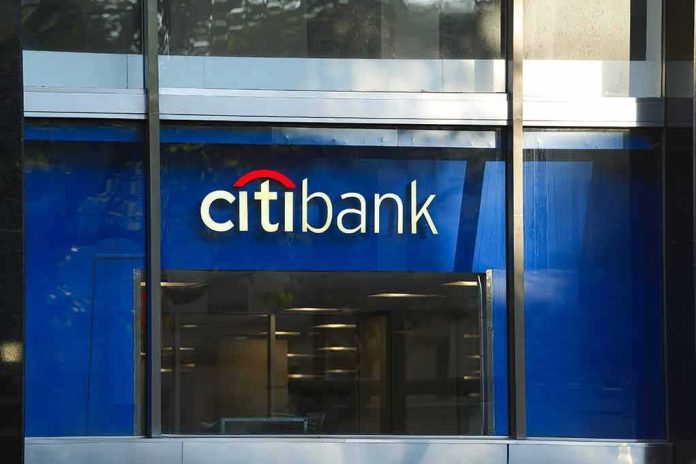
Hillsborough County deputies said the attacker drove onto Citibank’s Brandon campus around midday, got out with a rifle, and shot a woman outside before moving toward the cafeteria. The Hillsborough County Sheriff’s Office said 911 calls began at 12:11 p.m. By about 12:15 p.m., a Citibank security guard confronted the gunman inside the cafeteria and fatally shot him after an exchange of fire, stopping the threat while employees sheltered or fled.
Officials described the episode as an active threat at a large corporate site with thousands present. Authorities said about 3,200 employees were on the property at the time, heightening the risk as the gunman moved indoors. The quick engagement by the guard narrowed the window of danger. The casualty count remained limited to the woman who was killed outside, four people with non-life-threatening injuries, and the shooter, who died after the shootout with the guard, according to officials.
How the response unfolded across a sprawling campus
The Hillsborough County Sheriff’s Office surged resources to the scene. The agency reported that 367 deputies responded and completed a clearing operation within roughly two and a half hours, a scale meant to secure multiple buildings and locate any further threat. The guard’s immediate action, paired with the rapid law-enforcement sweep, formed the backbone of the containment narrative. Employees evacuated to a reunification point as teams methodically checked offices, hallways, and common areas to confirm the campus was safe.
Deputies and Citibank personnel coordinated to move people out of harm’s way and gather statements. Investigators began building a timeline from surveillance, witness accounts, and scene evidence. The sheriff’s team publicly emphasized the defining moment: the guard’s decision to close distance and return fire. That choice ended the attack inside a place where many workers had few options. On a campus of that size, seconds matter; a hallway or door can mean the difference between safety and exposure.
What officials say about motive and the early facts
Authorities framed the shooting as targeted rather than random, and a later report cited a $2,500 debt dispute as the spark for the killer’s rage, connecting a personal grievance to workplace violence at scale. That portrait tracks with many modern attacks, where a single score to settle becomes a public emergency. The sheriff’s office briefed the public on the weapon, the path to the cafeteria, and the guard’s counter-fire, without claiming more than the evidence supported at that stage.
A timeline from the Hillsborough County Sheriff's Office on the Citibank Campus shooting on Wednesday, Nov. 4, near Tampa, Florida. https://t.co/PtIYXxoxGU pic.twitter.com/CCsBHsvIwV
— FOX 13 Tampa Bay (@FOX13News) November 6, 2026
Federal Bureau of Investigation (FBI) data show how these events often end. In recent summaries, a minority of shooters are stopped by armed security or law enforcement fire, while many surrender or die by suicide. The 2025 FBI report counted seven shooters killed by police or security out of 34 incidents, underscoring how decisive interventions, when they happen, can be rare and consequential. That context matches the sheriff’s point: the guard’s actions froze a fluid threat while many lives were at stake.
Why this incident will shape security playbooks
Corporate campuses now build plans around speed, visibility, and trained on-site defense. This case will reinforce those choices. A guard who can reach the threat in minutes stands between chaos and a tragedy that spreads. For companies, that means testing gates, camera coverage, radio links, and guard placement at choke points like cafeterias and lobbies. For workers, it means drills that are brief, blunt, and repeatable under stress—run, hide, and fight only if you must.
Common sense and conservative principles point to an old truth: when danger walks in, seconds count, and the closest good guy with a gun has to move. Police mobilized hundreds, but the person who ended this was already there. The facts support that claim here. The timeline is tight. The location is crowded. The outcome, while tragic, could have been far worse without an armed guard who trained for the moment and met it.
Sources:
youtube.com, apnews.com, sanluisobispo.com, tampabay28.com, wtsp.com, fox13seattle.com, fox35orlando.com, fbi.gov