Trump tied a moving caravan to Mexico’s wallet with one blunt threat: double the tariffs, now.
Story Snapshot
- Trump warned Mexico to stop a south-to-north caravan or face doubled tariffs.
- Reporters counted about 1,500 people leaving Tapachula and heading north.
- Mexico’s president rejected threats and said cooperation, not closures, is the plan.
- Legal authority and timeline for rapid tariff doubling remain unclear.
What Triggered The Standoff
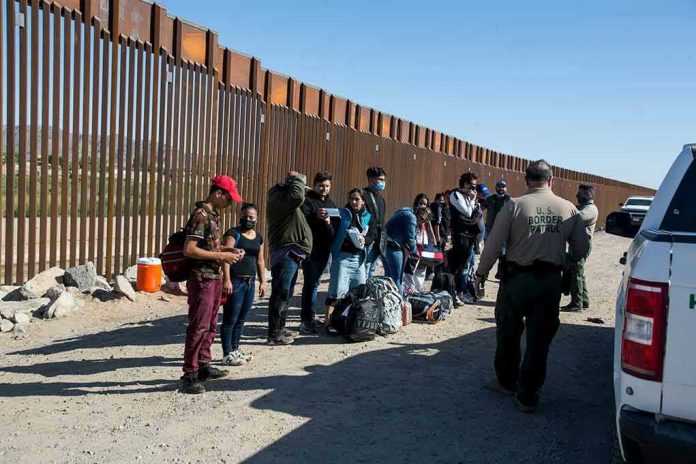
President Trump posted that Mexico must stop the caravan now, or tariffs on Mexican goods would be immediately doubled. He said the migrants will not be accepted and told Texas, Border Patrol, and Immigration and Customs Enforcement there would be no leniency. Reuters and other outlets placed an estimated 1,500 people, mostly from Central America, departing Tapachula and moving north. That headcount is an estimate. Some outlets and online voices used larger figures, which were not verified in the same reports.
Trump has said for years that caravans can include dangerous people the United States does not want. He made that point in 2019 and echoed the spirit of it here. The current reports did not present proof that the group itself carried weapons or included a national security threat. That absence does not erase risk at scale, but it does mean the case relies on deterrence logic and broader border-crime patterns rather than named bad actors in this group.
Mexico’s Public Position And The Friction
Mexico’s President Claudia Sheinbaum said Mexico would not close borders but would build bridges between governments and people. She stated that actions on migration did not stem from Trump’s threats and that the caravan he raised would not reach Mexico’s northern frontier. She framed the issue as one solved by cooperation, not tariffs or threats. That message distances Mexico’s choices from U.S. pressure and challenges the idea that trade punishment is the right lever.
That split leaves a test of will. Trump’s threat was simple: stop the group or pay at the port. Mexico’s stance was also simple: manage migration on Mexico’s terms, with coordination, not coercion. The gap between those views sets up a policy collision that plays out on roads in Chiapas and in freight lanes in Laredo. It also feeds political narratives on both sides of the border, each with its own audience and incentives.
The Tariff Hammer: Power And Puzzles
Bloomberg Law reported that it was not clear what legal authority would let the White House immediately double tariffs in this scenario. No timeline was specified. That uncertainty does not mean tariffs could not rise later through another tool, but it tempers the threat’s instant bite. Traders, importers, and consumers would feel shock if tariffs truly doubled overnight, and they tend to demand chapter-and-verse authority first.
Trump threatens to double tariffs on Mexico if migrant caravans not stopped
President Donald Trump is using his tariff leverage to urge Mexico to stop a migrant caravan from reaching the U.S. southern border.
"Huge CARAVANS are forming and beginning their illegal march through…
— JV (@joveg8) November 12, 2026
Trade history shows tariffs can redirect supply chains and hurt growth if misused. The Federal Reserve and regional research have documented how tariff shifts change volumes, prices, and jobs. Those effects land fast in border states and spread through autos, electronics, and food. A policy that hits Mexico’s exports also hits U.S. factories that depend on Mexican inputs. That practical linkage pushes many voters to want firm borders and smart enforcement without self-inflicted economic harm.
Security, Scale, And What Comes Next
The group size reported was about 1,500, with some claims edging higher. The precise number matters less than control. A caravan that can test weak spots and overrun finite resources can force chaos even without weapons. Conservatives value order, the rule of law, and a border that means something. A clear, legal, and enforced policy is not cruelty; it is how a sovereign nation protects citizens and allows lawful entry with dignity and predictability.
Sheinbaum’s promise that the caravan would not reach the northern frontier creates a measurable claim. Either Mexico contains, disperses, processes, or returns the group, or it does not. If it does, deterrence by pressure—or by Mexico’s own calculus—worked. If it does not, U.S. border agencies will face another high-visibility surge. That outcome will reset the debate over tools—agreements, returns, transit limits, and, if lawful, trade pressure—to restore control at the least economic cost.
Sources:
facebook.com, news.bloomberglaw.com, rawstory.com, huffpost.com, wfmd.com, elpasotimes.com