A Minnesota mother stabbed her two young sons, then strategically set fires at every exit to trap them inside, a calculated act of filicide that reveals the darkest betrayal imaginable.
Story Snapshot
- Jennifer Marie Stately convicted on five counts of first-degree murder and arson for killing her sons Remi, 6, and Tristan, 5, on March 15, 2024
- Prosecutors proved she used gasoline and lighter fluid to ignite fires at exit points, deliberately blocking escape routes after stabbing the boys
- Jury rejected her insanity defense; surviving 3-year-old son found wounded and neglected after she fled with him
- Federal, state, and tribal law enforcement collaborated on the Red Lake Indian Reservation case, emphasizing justice for victims who died in their mother’s care
The Crime That Shocked Red Lake
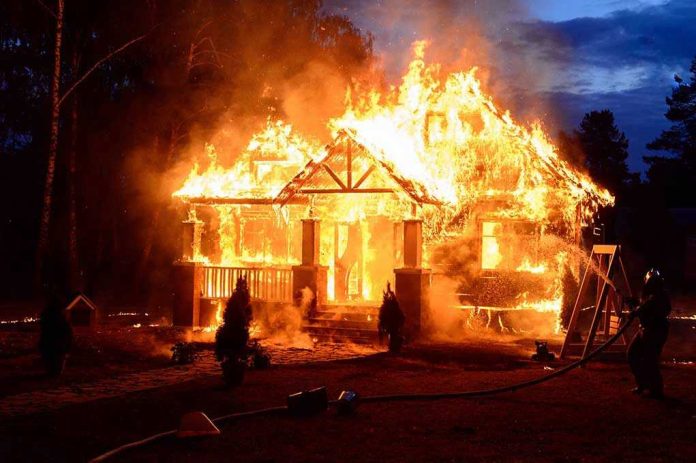
Jennifer Marie Stately, 37, committed an act prosecutors described as deliberately designed to ensure death. On March 15, 2024, inside her home on the Red Lake Indian Reservation in Minnesota, she stabbed her 6-year-old son Remi in the chest and attacked 5-year-old Tristan. ATF investigators later determined she poured gasoline and lighter fluid at three strategic locations throughout the house, focusing on exits. Remi died from stab wounds. Tristan succumbed to smoke inhalation, trapped as flames consumed the home. She fled with her 3-year-old son, triggering an AMBER Alert that mobilized multiple agencies across sovereign tribal land.
The Bureau of Criminal Apprehension, FBI, and tribal authorities located Stately with the youngest child, who bore visible wounds and signs of neglect. The deliberate placement of accelerants at exits transformed what might have been survivable injuries into certain death sentences. Rick Evanchec, FBI Minneapolis interim special agent, captured the profound betrayal: these young victims had no chance while in the care of the one person who should have kept them safe. The Red Lake community, a tight-knit sovereign nation, faced what Drew Evans of the Bureau of Criminal Apprehension called a loss that would impact them forever.
Premeditation Defeats Insanity Defense
Stately’s legal team pursued an insanity defense, attempting to argue diminished mental capacity absolved her of criminal responsibility. The jury saw through this strategy. Prosecutors from the U.S. Attorney’s Office for the District of Minnesota presented overwhelming evidence of premeditation: the purchase or acquisition of accelerants, the methodical placement at exits rather than random locations, and the timing of stabbing followed by arson. These calculated steps contradicted any claim of impaired judgment. The jury delivered guilty verdicts on five counts of first-degree murder and one count of arson, affirming that Stately understood exactly what she was doing and intended the deadly outcome.
The rejection of the insanity defense matters beyond this single case. It reinforces a standard that horrific acts against children, even by parents, will face full accountability when evidence shows deliberate planning. Mental health struggles, while real and deserving of compassion in appropriate contexts, cannot excuse the systematic murder of defenseless children. The jury’s decision reflects common sense: a person capable of obtaining accelerants, strategically blocking exits, and executing a multi-step plan to kill possesses sufficient mental clarity to be held responsible. This verdict sends a message that maternal status offers no shield when evil intent is proven.
Multi-Agency Response on Sovereign Land
The crime’s location on the Red Lake Indian Reservation added jurisdictional complexity requiring seamless coordination between federal, state, and tribal authorities. Major crimes on reservations often trigger federal oversight due to sovereignty issues and resource limitations. The AMBER Alert system activated immediately after Stately fled with the 3-year-old, enabling rapid information sharing across jurisdictions. FBI agents, Bureau of Criminal Apprehension investigators, ATF arson specialists, and Red Lake tribal police worked unified command structures to locate the suspect and surviving victim. This collaboration exemplifies how law enforcement can transcend bureaucratic boundaries when children’s lives hang in the balance, a model worth replicating in future reservation-based investigations.
Justice and Unanswered Questions
Drew Evans emphasized that holding Stately accountable provides some sense of justice for the family and Red Lake community, though nothing can restore what was stolen. The conviction brings legal closure, yet emotional and spiritual wounds remain open. The surviving 3-year-old faces a lifetime processing trauma inflicted by the mother who should have been his protector. Extended family members must reconcile grief with the incomprehensible reality that these deaths were intentional, not accidental. Sentencing has not yet been scheduled, leaving one final chapter unwritten in this tragic story.
Critical questions persist despite the conviction. What motivated Stately to murder her own children? Were there warning signs family or authorities missed? Could earlier intervention have prevented this tragedy? The sources provide no background on Stately’s mental health history, prior child welfare involvement, or precipitating stressors. These gaps matter because understanding causation helps prevent future filicides. The case also raises broader concerns about child protection resources on reservations, where geographic isolation and jurisdictional complications can delay responses. Policymakers should examine whether enhanced screening, mental health access, and emergency protocols might save lives in vulnerable communities like Red Lake.
Sources:
Mom convicted of killing 2 children, setting home ablaze and fleeing with third