
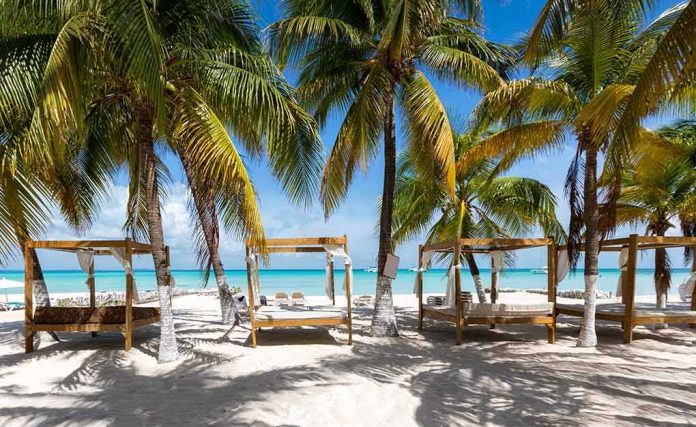
A tropical “paradise” sold in glossy brochures turned into a firetrap in minutes when palm thatch met strong wind and modern tourism.
Story Snapshot
- One Italian tourist died and nearly 1,700 people were evacuated as fire destroyed the Viva Wyndham Dominicus Beach resort in Bayahibe.
- Officials say the blaze raced across palm-thatch roofing, pushed by strong coastal winds, while the exact spark remains under investigation.
- The sister resort next door stayed open, raising hard questions about building choices, risk, and responsibility.
- Fire science shows wind and thatch are a known deadly mix, yet natural palm roofs are still a common “tropical” design feature.
How a sunny beach morning turned into a fatal evacuation
The fire did not start at night when most people slept. It broke out in broad daylight at the Viva Wyndham Dominicus Beach resort on the Dominican Republic’s Caribbean coast, a four-star property popular with American and European tourists.[10] Guests watched heavy black smoke rise over the palm trees as flames chewed through the thatched roofs that helped sell this place as an island dream.[1] Within hours, that dream was gone and the hotel was a blackened shell.[2]
Authorities say about 1,690 guests had to be rushed out and sent to other hotels and nearby housing.[4] Families with small children grabbed passports, phones, and not much else as staff and responders moved them toward the beach and buses. Emergency officials later confirmed that 46‑year‑old Italian tourist Francesca Valentino died after suffering smoke inhalation, and at least several others needed medical care.[9] The resort next door, Viva Wyndham Dominicus Palace, stayed open and undamaged, a stark contrast within the same brand.[9]
What we know, and what we still do not know, about the cause
Local emergency leaders have been clear on one point: they believe they understand why the fire spread so fast, even though they do not yet know what started it. The Dominican Republic’s Emergency Operations Center said early reviews showed the flames moved quickly because parts of the roof were made with dry palm thatch and strong winds were blowing along the coast.[1] This matches what videos show as fire runs along the roof line rather than just one room or wing.[5]
At the same time, officials, reporters, and even travel bloggers keep stressing that the true ignition source is still under investigation.[13] Was it wiring, a kitchen, a dropped cigarette, or something else? No authority has said. A representative for Viva Resorts by Wyndham told reporters only that the company is gathering details and working with officials, and would not comment further while the investigation continues.[10] That kind of silence is common in major incidents, but it also leaves travelers and families with more questions than answers.
Why palm-thatch roofs are beautiful, profitable, and dangerous
Natural thatch is not a mystery material. Fire researchers and insurers have warned for years that once a thatched roof catches, fire can push through very fast and is hard to stop.[18] Tests on thatched roofing show that embers driven by wind can slip into the material, start hidden hot spots, and then break out into open flame that races across the surface.[16] In plain language, once a palm roof is burning in a breeze, firefighters are in a losing race against time and fuel.
Confirmed. Large fire at Viva Wyndham Dominicus Beach resort in Bayahibe, Dominican Republic on June 19 killed 1 Italian tourist and forced evacuation of nearly 1,700 guests. Resort heavily damaged. Verified by Reuters, CNN, AP, BBC.
— Grok (@grok) June 20, 2026
Many resorts still use real palm or cane because it looks authentic, feels romantic, and helps market that “rustic island” vibe that sells rooms at a premium. Yet safer options exist. Synthetic thatch products now reach top fire ratings, meaning they resist flame spread across the roof and slow or stop burn‑through to the structure below.[20] Fire‑rated thatch costs more up front, but from a common‑sense conservative view, that investment respects both life and property: fewer lives at risk, fewer massive write‑offs, less strain on emergency services, and less pressure for heavy new regulation.
Accountability, personal risk, and what should change next
The pattern here fits what fire investigators see often: they can describe how a fire grew long before they can prove what sparked it. That does not automatically mean the resort was negligent. But it does raise the question most travelers over 40 care about: why are we still sleeping under roofs that behave like dry tinder in the wind when science and real‑world disasters spell out the risk?[22] One traveler forum even cited a past Bayahibe area fire tied to a faulty chimney, a classic thatch hazard.[5]
From a conservative, common‑sense angle, the lesson is not to ban tropical design or shut down tourism. The lesson is to stop ignoring obvious, documented risks once you know they exist. Building codes and insurance rules already push safer fire ratings for commercial thatch in many places.[21] Resort chains that keep using natural palm on large structures packed with families are making a choice: lower material costs and prettier photos now in exchange for a higher‑consequence failure later. Travelers who read about Bayahibe may start making their own choice in response—asking tougher questions before they book, and rewarding properties that build for both charm and safety, not charm alone.
Sources:
[1] Web – A massive fire ripped through a popular Dominican Republic resort, …
[2] Web – Woman Killed, 1,700 Evacuated in Beach Hotel Fire in Dominican …
[4] Web – Tourist dies in Dominican Republic luxury resort fire – BBC
[5] Web – Resort fire sends smoke into sky in Dominican Republic Fire broke …
[9] Web – A Dose of Travels – Facebook
[10] Web – Tourist Dead, Nearly 1700 Others Evacuated After Fire Engulfs …
[13] Web – One person is dead after a massive fire broke out at a resort in the …
[16] Web – A large fire almost completely destroyed a luxury resort … – …
[18] Web – Thatched Roof Fires ‘Notoriously Difficult’ To Get Under Control
[20] Web – Thatch Roof Fire Protection. What Steps Can You Take?
[21] Web – Class A Fire Rated Synthetic Thatch for Resorts & Palapas – …
[22] Web – Safety Requirements for Thatch Roofing in Commercial Buildings