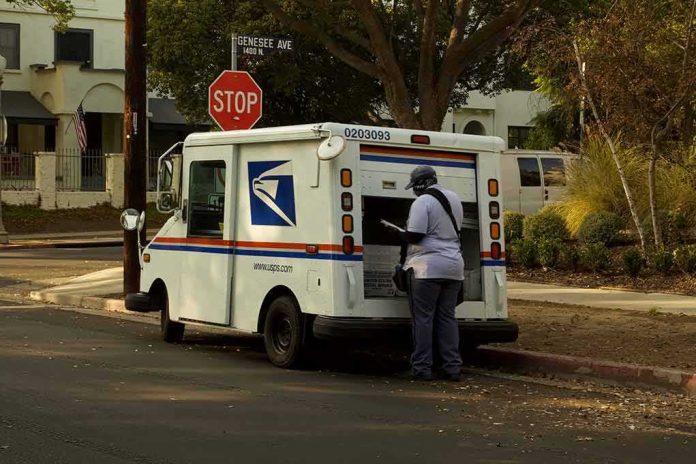
Federal prosecutors say a Fresno County mail carrier kept more than 8,500 pieces of mail, including tax, medical, and financial records, instead of delivering them.
Story Snapshot
- Federal prosecutors charged a 53-year-old former Fresno County mail carrier with keeping and failing to deliver mail.
- Court records state more than 8,500 undelivered pieces were recovered from August to September 2024.
- The stash allegedly included tax records, medical correspondence, insurance and financial documents, and utility bills.
- The U.S. Postal Service Office of Inspector General led the investigation; the carrier was placed on leave and resigned.
Federal Case Centers On Thousands Of Sensitive Documents
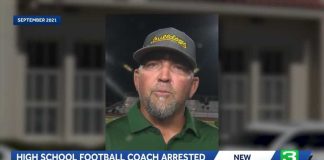
Federal prosecutors charged Ronald Juckno, 53, a former mail carrier in Fresno County, with keeping and failing to deliver the mail. Local outlets reported the announcement by the United States Attorney’s Office and identified Juckno by name and age. Court-record summaries say investigators tied the conduct to a tight window, August through September 2024, and counted more than 8,500 pieces in total. The United States Postal Service Office of Inspector General led the probe, which triggered leave and then a resignation.
Reporting based on court records describes the types of mail in plain terms most people would guard with care: tax records, California labor department letters, medical and insurance correspondence, financial records, and monthly bills. That mix matters. Sensitive mail can expose someone’s identity, upend benefits, and cause missed payments. It also maps to key rights. The law protects sealed mail because families and small businesses need a basic promise: what you send reaches who you address, on time and unopened.
What Investigators Say They Found And Why It Resonates
Investigators from the United States Postal Service Office of Inspector General handle internal misconduct and fraud cases that cross from policy lapses into crimes. Their work often becomes public only when a prosecutor files charges. In this case, prosecutors assigned Assistant United States Attorneys to bring the matter forward, signaling they view the count and timeframe as serious enough for federal court. The alleged volume—more than 8,500 pieces—suggests a pattern, not a one-off mistake.
Scale draws attention, but context shows this is not an isolated curiosity. The United States Postal Service Office of Inspector General’s fall 2024 semiannual report said it closed 773 mail-theft investigations in just six months and recorded 258 arrests in that window. Government watchdogs have pressed the Postal Service and the Postal Inspection Service for stronger controls. A follow-up audit released in 2026 tallied more than 800,000 mail theft complaints across three fiscal years, underscoring the size of the problem.
Why The Details Matter For Households And Small Businesses
When mail vanishes, the pain shows up in late fees, missed deadlines, and privacy risk. A delayed insurance letter can pause a claim. A missing tax document can wreck a filing. A stalled medical bill can land in collections. People do not have time to chase envelopes that never arrive. That is why federal law treats obstruction of mail as a crime and why prosecutors move on cases with sensitive documents and clear timelines. It aligns with common sense and basic fairness.
The Fresno case stands out because the time span is specific and the count is large. That makes potential harm easier to trace and prove. If customers missed payments or agency deadlines in August or September 2024, those records may now matter in court. The investigation also signals where oversight works: route checks, tips, and evidence recovery can surface hidden failures. The United States Postal Service Office of Inspector General says these cases are a persistent focus, not a rare surprise. A single caveat applies: a charge is an allegation until a conviction or plea.
What Comes Next In A Federal Mail Obstruction Case
Federal cases like this often move through a steady path: arraignment, discovery, potential plea talks, and, if needed, trial. Prosecutors must show knowing failure to deliver mail that the carrier was entrusted to deliver. Defense counsel can test how items were found, counted, and linked to specific routes. Judges look for clear evidence that meets each legal element. This is sober work, not drama. But for people whose mail sat in a stash, the result is personal and immediate.
Ronald Juckno — former Fresno USPS mail carrier indicted for keeping 8,500+ pieces of undelivered mail, including tax and medical records; placed on leave and resigned. Story: https://t.co/YSnVj1lf61
— CancelPeople.com (@cancelpeoplenow) September 15, 2026
Policy steps also follow patterns. The United States Postal Service can review route supervision, scan compliance, locker checks, and vehicle sweeps. The watchdog community will compare this case to past audits and track whether internal fixes stick. That is the right approach. Trust in the mail is built on simple promises kept at scale, day after day. When a breach hits thousands of pieces, the response must be just as concrete: find it fast, fix it once, and prove it with data.
Sources:
nypost.com, kmph.com, abc30.com, fresno.courts.ca.gov