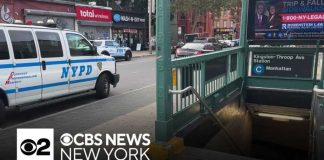
A Utah judge just handed the media a victory that could reshape how Americans watch high-profile murder trials, but the real question nobody’s asking is whether livestreaming a defendant’s face into millions of living rooms actually prevents conspiracy theories or simply manufactures them in real time.
Quick Take
- State District Judge Tony Graf denied Tyler Robinson’s motion to ban cameras from his murder trial on May 8, 2026, ruling that electronic media coverage serves the public’s right to observe justice in action [1][2]
- Robinson’s defense team argued that live broadcasts and edited footage would bias jurors by exposing them to prejudicial media commentary between trial sessions [4][5]
- The victim’s widow, Erika Kirk, and major media outlets supported camera access, citing transparency as a safeguard against conspiracy theories surrounding the September 10 assassination [1][2]
- The preliminary hearing was rescheduled to July 6 through July 10, giving Robinson’s legal team additional time to prepare [1][4]
- Judge Graf stated that coverage decisions will be made on a case-by-case basis rather than through categorical prohibition [2][4]
The Transparency Paradox
Judge Tony Graf’s reasoning sounds ironclad on its surface. Livestreaming courtroom proceedings, he argued, allows interested citizens to observe the justice system directly and hold government accountable without relying on edited news packages or social media summaries. The logic is seductive: more eyes on the trial means less room for conspiracy narratives to flourish in darkness. Yet this assumes that transparency and misinformation operate in inverse proportion, a premise that doesn’t hold up under scrutiny [2][4].
The defense raised a specific concern that deserves weight: jurors will be exposed to edited footage and real-time commentary between trial sessions, creating a feedback loop of prejudicial messaging. A juror watches an hour of testimony, then sees a two-minute viral clip reframed through a commentator’s political lens, then reads social media reactions to that clip. By the time court reconvenes, that juror’s subconscious has been primed by multiple layers of interpretation, none of which appeared in the actual courtroom [5].
When Transparency Becomes Theater
Graf acknowledged the concern but declined to ban cameras entirely, stating that electronic media coverage is not constitutionally protected but neither does the Constitution ban it simply because prejudice might occur in some cases. This is legally sound but pragmatically incomplete. The judge retained discretion to restrict coverage on a hearing-by-hearing basis, which means the real battle will unfold not on May 8 but during the trial itself [2][4].
The victim’s widow, Erika Kirk, supported camera access explicitly to counter conspiracy theories circulating since the assassination. This framing deserves scrutiny. Conspiracy theories don’t typically dissolve when exposed to contradictory evidence presented in a courtroom. If anything, livestreamed proceedings provide raw material for competing interpretations. A defense cross-examination that looks thorough to a lawyer looks evasive to a social media algorithm designed to maximize engagement through outrage [1][2].
The Real Cost of Public Trials
Robinson’s defense team bore the burden of proving that a categorical ban on cameras was justified under Utah law. They failed to clear that bar, which tells us something important: state laws generally favor media access in criminal proceedings, especially high-profile ones. This reflects a democratic value, but it also reflects the practical reality that judges hesitate to impose restrictions that look like they’re hiding something [1][4].
The preliminary hearing delay to July provides a window into how these cases actually unfold. While the judge was deciding camera access, Robinson’s team won a more substantive victory: time. The rescheduling gives the defense additional months to prepare motions, discovery, and jury selection strategy. In high-profile cases, the media battle often overshadows the legal one, but the legal one ultimately determines guilt or innocence [1][4].
Courtroom cameras allowed in Charlie Kirk murder trial https://t.co/xJh8cwQLN1
— Marie Rapacz (@Rapa61874Rapacz) May 11, 2026
What Accountability Actually Requires
Graf’s statement that livestreaming allows citizens to “hold our branches of government accountable” contains an implicit assumption: that government actors behave differently when watched. There’s truth to this in some contexts, but courtrooms operate under strict procedural rules regardless of whether cameras are present. The judge follows the law, the prosecutor follows discovery rules, and the defendant’s constitutional rights exist with or without a livestream audience [2][4].
The real accountability mechanism in criminal trials isn’t public observation—it’s appellate review. If a conviction is obtained through media-tainted jury selection or prejudicial courtroom conduct, that becomes grounds for appeal. The livestream doesn’t prevent those errors; it documents them. Whether documentation deters errors or simply creates a permanent record of them remains an open question that this trial will help answer [2][4].
Sources:
[1] Judge to rule Friday whether Charlie Kirk murder case can be filmed, photographed
[2] Cameras stay in court as Tyler Robinson’s defense wins delay
[4] Charlie Kirk murder: Judge allows cameras in Tyler Robinson trial
[5] Judge denies request to ban media access in Charlie Kirk murder …