Trump urged Jensen Huang to hold the line at Nvidia even as an FBI probe and a board investigation closed in, because he saw the company as a national asset first and a scandal risk second.
Story Snapshot
- Trump publicly praised Huang’s character and leadership during the controversy.
- Trump framed Nvidia as vital to U.S. technology strength and hard to replace.
- Reports say Trump privately pressed Huang to stay on days before the exit.
- Nvidia’s board launched an independent probe while the FBI inquiry was acknowledged.
What Trump Said, And Why It Mattered
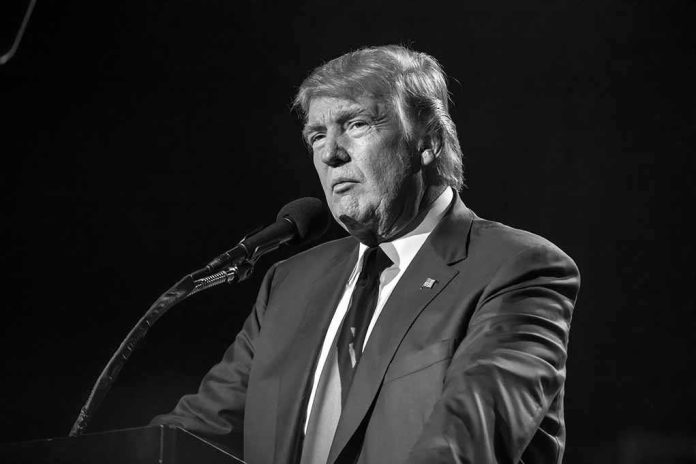
President Trump called Jensen Huang an honorable leader and said he expected Huang would be “in good shape,” even as he confirmed the Federal Bureau of Investigation (FBI) was looking at the case. He leaned on a simple national-interest claim: Nvidia’s chips power the artificial intelligence boom, and the firm’s edge runs years ahead. He said Huang told him he had “absolutely no idea” the woman was a spy. Trump presented Nvidia as too central to stumble during a leadership shock.
Trump’s argument rested on scale and scarcity. He said Nvidia was among the world’s largest companies and that its chip technology was not easy to copy or swap out on short notice. That framing fits a hard-nosed view: protect the supply chain first, settle the scandal after. For many conservatives, that sounds like common sense. Keep the engine running while investigators do their job. Do not hand China a win by destabilizing the crown jewel of American computing.
The Reported Push To Stay Versus The Board’s Probe
Two people familiar with a call told reporters that Trump urged Huang to stay on as chief executive in the days before the resignation. That nudge met a stiff headwind. Nvidia’s board had already announced an independent investigation after reporting that Huang was targeted by a foreign-intelligence effort. Trump did not dispute the inquiry. He said federal agents were examining the matter. The board’s step signaled that corporate governance would not yield to politics or public praise alone.
National security concerns raised the stakes. News reports, citing U.S. intelligence, said the woman at the center of the affair acted as a Chinese intelligence asset who passed information to Beijing. The board probe and federal interest made this more than a private-morals scandal; it became a question of access risk and corporate controls. That is why the leadership debate turned so sharp, so fast. Trump’s backers argued continuity. Critics argued prudence under pressure.
The Denial, The Investigations, And The Conservative Read
Trump said Huang personally denied knowing the woman was a spy. That claim, as reported, rests on Trump’s account of their talk, not on a released transcript or sworn record. The presence of an FBI inquiry and a board probe means the facts were not resolved in public view when Trump vouched for Huang’s integrity. On the merits, the strongest case for Trump’s stance is that the United States cannot afford chaos in its most strategic chip supplier while agencies sort out the truth.
🇺🇸🇨🇳🇴🇲 Jesse Watters says a reported Jensen Huang scandal could fuel an impeachment push against President Trump and his Cabinet.
Fox News says the Nvidia CEO resigned after revelations of multiple alleged extramarital affairs, including one involving a woman suspected of spying…
— Ahmad Shah Mohibi (@WarGuy_) November 13, 2026
Conservatives who prize the rule of law and national strength can hold two thoughts at once. First, no leader should get a pass if security was compromised. Second, America should avoid self-inflicted harm by toppling mission-critical leadership before the facts are clear. The board can run a tight investigation, the FBI can do its job, and the company can execute a real succession plan if needed. That mix beats trial by headline and market panic any day.
After The Exit: What The Praises And Protests Signal
Huang resigned. Trump kept praising his record and even floated a high-profile successor pick, signaling his view that Nvidia’s bench and continuity matter more than the spectacle around it. Not all Republicans agreed. Senator Kevin Cramer said he could not believe the idea of Huang staying was even on the table, showing public splits on how to handle risk at the very top of a private firm this important. That divide frames the real question now: what stabilizes the company fastest without blinding the watchdogs?
The market and Washington will keep score on three fronts. Did Nvidia keep shipping, supporting, and securing its systems without missing a beat? Did the board and investigators reach clear findings that restore trust? Did the White House’s stance help steady a strategic asset or blur lines with a private board’s duty? On those tests, results will speak louder than sound bites. The right standard is simple and tough: protect the country, protect the company, and protect the truth.
Sources:
mediaite.com, people.com, bbc.co.uk