Armed robot dogs led a joint Haitian–Salvadoran push to retake Haiti’s national stadium, and troops reported finding skulls inside.
Story Snapshot
- Haitian and Salvadoran forces seized Sylvio Cator Stadium in Port-au-Prince on November 12, 2026.
- El Salvador’s president said rifle-mounted robot dogs supported the operation inside the stadium.
- Bukele said several human skulls were discovered during the sweep; video showed a skull-like object.
- The mission fits a wider shift to multinational, tech-assisted crackdowns on gangs in Haiti.
Bukele announces a joint stadium seizure, names the forces involved
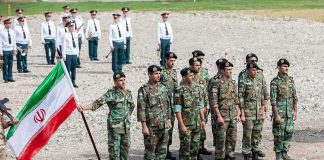
El Salvador’s President Nayib Bukele said a joint mission took control of Sylvio Cator Stadium under a bilateral agreement with Haiti. He named the Haitian National Police, the Haitian Armed Forces, a Task Force, and Salvadoran Special Forces as participants. His statement framed the stadium as gang-held ground and the operation as a coordinated push to secure it. That clear attribution matters, because it ties the action to identified forces and a formal political channel, not a vague rumor.
Reports from HaitiLibre and specialized outlets date the stadium takeover to November 12, 2026. They identify the site as Haiti’s national soccer stadium in downtown Port-au-Prince. Coverage says gangs had controlled the complex for more than two years before the joint sweep. That timeline tracks with broader reporting on gang encroachment in the capital and shows why the stadium carried both symbolic and tactical weight in the city’s fight for normal life.
Rifle-mounted robot dogs appear in the stadium footage
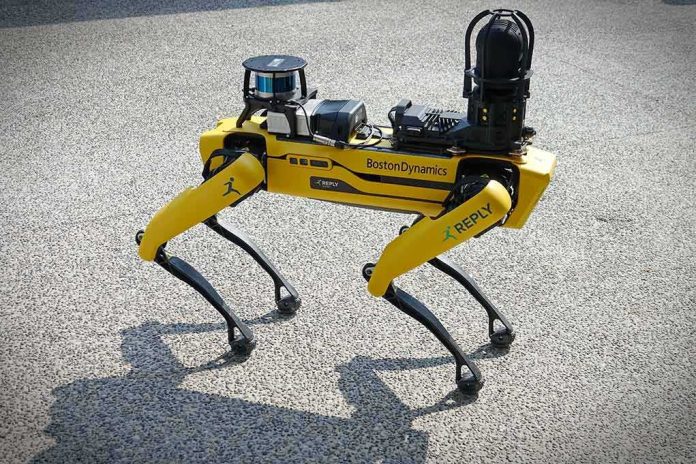
Video released with the announcement showed quadrupedal robots moving through interior halls and climbing stairs. Reports describe rifles mounted to the robots on metal brackets, with rods reaching the triggers. One outlet assessed the platforms as looking like a known commercial robot and the rifles as resembling a modern assault rifle, based on visible features. Those identifications were visual assessments, not procurement records, but the armed configuration on screen is plain enough to note.
Coverage also said it was not clear how the robots helped the mission in real time. The footage did not show firing, and reports did not cite logs or after-action records of shots. That does not change the core fact that armed robots were present in a live operation. It does frame them as a force multiplier and a message. Commanders often introduce new tools first for reconnaissance and shock effect, then refine tactics once operators gain confidence.
Skull report adds grim context to years of gang control
Nayib Bukele said several human skulls were found in the stadium during the clearing. Reporting on the video noted one object that looked like a skull lying near a wall. That claim fits with accounts of brutality in gang-held areas across Haiti in recent years. It also underlines why local families want fast control of public spaces. The stadium was not just a sports venue; it was a stronghold where fear ruled daily routines and public pride sat in ruins.
One line of caution appeared in coverage: outlets did not cite a formal forensic confirmation of the remains. That caveat aside, the central story stands on its own legs. Joint forces entered a major landmark, displaced gangs, showed new tech on the ground, and put a national symbol back under state control. That sequence is the measurable outcome that citizens judge: who owns the streets, and who can walk home without fear.
A hard-edge strategy inside a wider multinational push
The stadium operation sits within a broader shift to multinational help and advanced tools in Haiti’s fight against gangs. International frameworks already back support to Haitian authorities while requiring compliance with human rights law. Analysts and official updates describe a trend toward armored vehicles, drones, and integrated missions. El Salvador’s deployment slots into that pattern, showing how partners share muscle, tech, and training to claw back key sites from entrenched crime.
Robot dogs and Salvadoran troops make dramatic headlines in Haiti. Behind the optics, U.S. audits and contract data point to a billion-dollar ecosystem of guns, aid money, and private security deals.https://t.co/LL9Mjbft3O
— RYBAR_america (@rybar_america) November 15, 2026
Separate reporting tracks El Salvador’s wider troop presence linked to Haiti operations. Outlets described pledges or deployments of more than 2,000 Salvadoran soldiers around late October, tied to rescue goals and anti-gang activities. Those numbers speak to sustained intent, even if they do not map unit-by-unit onto the stadium team. The message to gangs is simple: the state is bringing friends, new tools, and the will to hold ground once it is taken.
Sources:
zerohedge.com, bbc.com, whmi.com, aljazeera.com, haitilibre.org