A car exploded on a Moscow street, and a well-known pro-Kremlin Ukrainian exile barely lived to tell it.
At a Glance
- Russian investigators opened a criminal case after a car exploded in southern Moscow.
- Reports identified the injured driver as Sergei Zavorotny, a former aide to Mykola Azarov.
- No suspect or group has been named; motive remains unproven.
- An alternative account says a gas system fault could have caused the blast.
A rush-hour blast, a political figure, and an open case
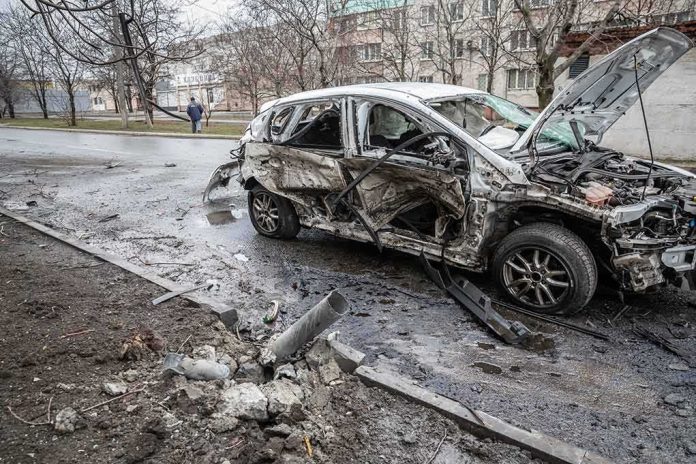
Russian authorities say a vehicle exploded on Kirovogradskaya Street in Moscow’s Chertanovo district, wounding the driver and sending him to the hospital. The Investigative Committee opened a criminal case and sent investigators to the scene, but did not name a suspect or spell out charges in its first statements. Multiple outlets reported that the injured man is Sergei Zavorotny, who once worked for former Ukrainian Prime Minister Mykola Azarov and later became a pro-Kremlin voice in Russia.
Reporters described serious injuries and a chaotic scene with a wrecked vehicle and a cordon. The core facts are straightforward: a car blew up, the driver survived, and investigators say a crime may have occurred. Everything beyond that sits in a fog. No group has claimed responsibility. No authority has said what device, if any, caused the explosion. The official case exists, but the early public record leaves many blanks that matter to accountability.
Why this target matters to Moscow and Kyiv narratives
Zavorotny’s profile makes him a ripe figure in the information fight. He served an ally of the Kremlin in Kyiv before the 2014 revolution and then moved to Russia, where he criticized Ukraine on air and online. That life story fits a pattern that invites quick blame from partisans. Azarov accused Ukrainian intelligence of trying to silence a critic, but he did not provide proof. That claim should sit in the parking lot until investigators present evidence that can stand in court or at least survive scrutiny.
Another thread pulls in the opposite direction. The Insider reported that a United States Senate Intelligence Committee assessment from 2020 identified Zavorotny as an officer of Russia’s foreign intelligence service, and a person who knew him said he had served in the Soviet KGB and worked on propaganda work in Europe. If accurate, that adds a very different context for motive and enemies, both foreign and domestic. These are serious assertions that deserve careful testing against official records and forensic findings.
Cause unknown: bomb under the seat or a gas fault?
Some security-linked Telegram channels claimed a device sat under the driver’s seat and was set off remotely, and one report even floated a rough explosive weight. The Telegraph noted that officials have not confirmed the cause. That is the right guardrail: treat online details as unverified until the evidence is on the table. The Moscow Times also reported a competing version that the car’s gas equipment failed, which would turn a suspected hit into a tragic malfunction if proven.
Former Ukrainian official aide Sergei Zavorotniy was severely injured in a car bombing in Moscow, marking the second high-profile explosive attack targeting prominent figures in Russia within 48 hours. pic.twitter.com/LxdRYHTNkN
— Azat TV (@azattelevision) November 13, 2026
Hard numbers or lab results would sort this fast: residue tests, fragments of a detonator, blast pattern mapping, and camera footage before and after the explosion. Without those, confident claims are theater. A sober read says two stories now compete: a planted bomb versus a mechanical failure. The first implies a hunter and a message; the second implies poor upkeep. Both cannot be true. The evidence will pick the winner, not the loudest megaphone.
What common sense says to watch next
Americans who value clear proof over spin should demand specifics. First, the legal label: attempted murder or a general criminal case? That matters for how Russia frames the event and what tools it uses next. Second, the forensics: publish what investigators found in the car and on the street. Third, the victim’s status: if Zavorotny held any Russian intelligence role, that changes risk math and likely suspects. Fourth, link analysis: another car blast hit Russia two days earlier; compare device parts and timing before suggesting a pattern.
Russia and Ukraine both run information campaigns. Each side benefits when a fast story hardens into “truth” before the lab work is done. The United States experienced this pattern enough to know better. Wait for verifiable facts. Weigh the source, the record, and the physical evidence. In this case, the safe bet is simple: a real explosion hurt a real man, the cause is not confirmed, and the motive is not proven. Anything beyond that is guesswork wrapped in politics.
Bottom line for readers who have six seconds
A car exploded. Investigators opened a case. Zavorotny, a known pro-Kremlin Ukrainian exile, was badly hurt. The internet calls it a hit. Another report says it might be a gas fault. Until officials show the bomb parts or the faulty valve, keep your mind open and your standards high. Facts first. Labels later. When authorities present testable proof, the story will write itself—and it will matter much more than the noise around it.
Sources:
zerohedge.com, kyivpost.com, washingtonpost.com, kalminer.com.au, euromaidanpress.com, monoscoops.com, themoscowtimes.com