The most explosive part of Trump’s new banking order is not the headline about “illicit finance” but the quiet instruction to treat illegal immigration itself as a red-flag risk inside America’s financial system.
Story Snapshot
- Trump’s order tells regulators to hunt for banking “red flags” linked to illegal immigration and shadow employment.
- Treasury is pushed to tighten identity checks, including a harder look at foreign consular identification cards and tax-only numbers.
- Lenders are nudged to treat deportation risk as a factor in whether a borrower can realistically repay.
- Supporters see long-overdue common sense; critics see the foundation for a quiet citizenship test for banking.
Trump’s Order Turns Bank Compliance Into an Immigration Battleground
President Donald Trump’s new executive order on “restoring integrity” to the financial system looks, at first glance, like yet another dense banking directive. Read closely, it is a strategic attempt to push illegal aliens out of the formal financial system by redefining how banks judge risk, verify identity, and extend credit. The White House frames the move as a crackdown on illicit finance and “structural credit risks” tied to non-work-authorized borrowers who might be deported or lose wages. [2]
The order tells the Secretary of the Treasury to issue a formal advisory spelling out “red flags and suspicious activity patterns” tied to payroll tax evasion, concealed account ownership, off-the-books wage payments, structuring schemes, labor trafficking, and the use of individual taxpayer identification numbers to open accounts or obtain credit without verified legal presence. [2] That is a sharp pivot: immigration status becomes a lens for detecting fraud, not just a matter for Border Patrol and immigration courts.
How Identity Documents Become the New Front Line
The order focuses on tools that illegal immigrants and many other noncitizens routinely use to navigate daily life: foreign consular identification cards and individual taxpayer identification numbers. Treasury and federal financial regulators are instructed to consider changes to Bank Secrecy Act rules so banks strengthen customer-identification programs and explicitly “account for the risks” that consular identification cards pose to the United States financial system. [2] The message is simple: documents that do not anchor cleanly to verified lawful status now carry a compliance stigma.
Banks already must “know their customer,” but this order encourages them to ask a blunter question: does this customer have the legal right to live and work here, and if not, what hidden risks might follow? The White House fact sheet says extending mortgages, credit cards, and auto loans to illegal aliens who face potential removal or wage loss creates “structural credit risks” for the system’s safety and soundness. [2] That aligns with conservative instincts about personal responsibility and realistic underwriting, even though the public record so far does not include hard default data by immigration status.
Lenders Told to Treat Deportation as a Financial Variable
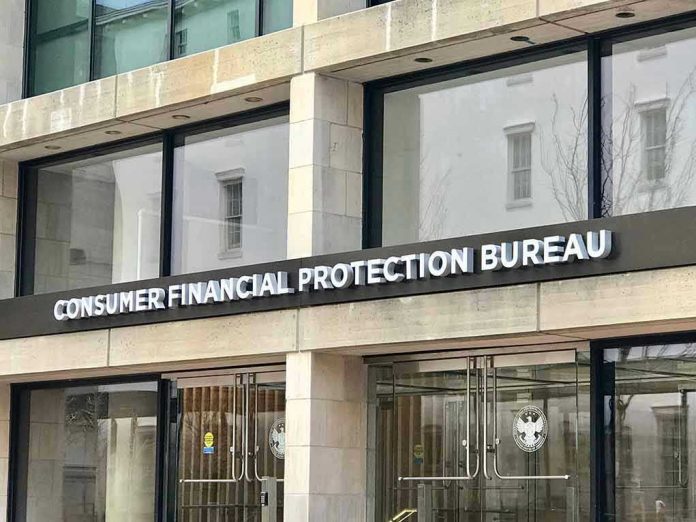
The Consumer Financial Protection Bureau receives a pointed instruction: consider clarifying that potential deportation and loss of wages are legitimate factors in ability-to-repay standards for mortgages and other credit. [2] That does not outright ban loans to non-work-authorized borrowers, but it gives lenders regulatory cover to downgrade or deny them based on immigration-related uncertainty alone. Critics warn that this turns what used to be a question of credit score and income into a question that hovers very near citizenship screening.
Supporters will argue this merely catches up with reality. A borrower who can be removed from the country at any time is inherently a higher risk, no matter how punctual last month’s payment was. From a common-sense, conservative view, ignoring that risk because it feels uncomfortable is the kind of wishful thinking that helped inflate past bubbles. Yet the sources describing the order acknowledge a gap: they offer no empirical evidence that illegal-alien borrowing has actually threatened bank stability on a meaningful scale. [1][2]
“Loopholes,” System-Wide Rules, and Who Gets Caught in the Net
The American Bankers Association’s coverage confirms that regulators are being told to strengthen customer due diligence, consider changes to identification programs, and potentially expand guidance across the system, not just for a narrow subset of accounts. [1] When Washington tightens these rules, banks rarely create one process for suspected illegal aliens and another for everyone else. They build a single, stricter standard. Lawful residents who rely on consular identification cards or individual taxpayer identification numbers for perfectly legitimate reasons may find their accounts delayed, questioned, or denied in the name of closing an “illegal alien” loophole.
Trump Moves to Squeeze Illegal Aliens Out of the U.S. Financial System with New Executive Order Targeting Banking Loopholes https://t.co/q6FK9wceac #gatewaypundit via @gatewaypundit Good, letting criminals get away with things is stupid & screws every person playing by the rules!
— Libertas (@LibertasVivet) May 20, 2026
The White House clearly believes serious abuse exists: the fact sheet links identity gaps to terrorists, drug traffickers, money launderers, and labor traffickers exploiting banks. [2] However, neither the official materials nor the trade-press summary supply bank examination reports, suspicious activity trend data, or loss figures that quantify the problem. [1][2] The public is being asked to take the underlying risk on faith while the machinery of regulation tightens. For many conservatives, that is the central tension: the goal aligns with their values, but the evidence remains mostly assertion, not demonstration.
Why This Fight Will Not Stay Inside the Banks
This order slots neatly into a broader pattern of Trump-era moves that blend immigration enforcement with financial and administrative levers: visa scrutiny, work-authorization policing, employer audits, and now transaction monitoring informed by immigration risk. [3] Supporters will see coherence in that strategy. Critics will see the scaffolding of a soft citizenship test for modern life, imposed not by a new law debated in Congress but through risk memos, exam manuals, and loan underwriting. Both sides have a piece of the truth, and neither will get the last word soon.
Sources:
[1] Web – New executive orders target banks and citizenship, nonbank access …
[2] Web – Fact Sheet: President Donald J. Trump Restores Integrity to …
[3] Web – Executive and Regulatory Actions Under the Second Trump …