A wounded captain opened the cockpit, passengers surged in, and a jet in a plunge did not crash.
Story Snapshot
- Passengers and crew overpowered an alleged attacker in the cockpit of a Flydubai jet.
- Captain Smit Machchhar was stabbed and hospitalized in stable condition.
- Passenger Yaniv Hayun says he choked the attacker and helped steady the aircraft.
- The plane diverted and landed safely in Saudi Arabia after a sharp descent.
A cockpit fight, a sudden plunge, and a hard turn toward survival
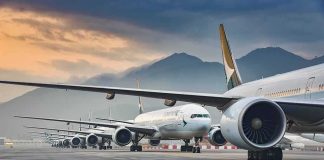
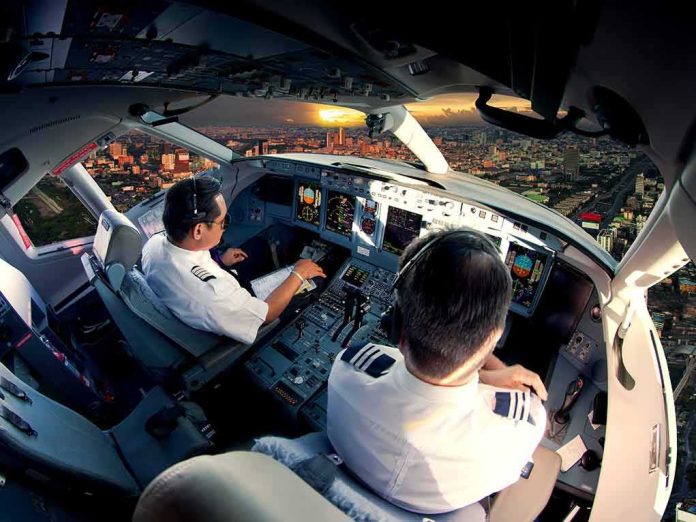
Flydubai Flight FZ1073 became a test of training, grit, and luck at cruising altitude. Reports say a pilot stabbed Captain Smit Machchhar inside the cockpit and tried to seize control. Passengers and crew pushed in after the injured captain opened the door, then subdued the attacker as the jet descended fast. Israeli Prime Minister Benjamin Netanyahu praised the action, saying it prevented a “catastrophic mid-air disaster”. The plane diverted and landed safely in Saudi Arabia.
Passenger Yaniv Hayun gave the clearest account of the fight. He said he grabbed the attacker in a chokehold and pulled him out of the cockpit. He also said he briefly grabbed the controls to help steady the aircraft until crew and others took over. News images later showed Hayun meeting Israel’s prime minister with his shirt stained in blood from the struggle, placing a human face on a minute where every move mattered.
Who did what in the most dangerous room on Earth
Captain Smit Machchhar’s name anchors the timeline. Outlets identify him as the wounded pilot who still helped enable the rescue by opening the reinforced door, which allowed help to enter. Accounts agree he survived the stabbing and remains in stable condition. Reports then describe passengers and crew swarming the cockpit area, overpowering the suspected attacker, and securing the flight deck so the jet could divert for an emergency landing.
Multiple outlets label the episode as an attempted hijacking or an effort to crash the plane. They report the attacker tried to disable instruments or seize control. That framing tracks with what post-9/11 travelers know in their bones: a cockpit breach is not a scuffle; it is a fight for every life onboard. The rapid descent, reported at more than 17,000 feet, supports the urgency passengers felt as they surged forward.
Aviation reality check: why this rescue story rings true
Air travel depends on layers of defense. Doors slow attackers, but they do not stop betrayal from inside. When an insider threat appears, the next layers are crew coordination, passenger courage, and basic airmanship. This chain held. Netanyahu credited the pilot’s actions with enabling the counterattack, while praising the passengers and crew for preventing disaster. That mix aligns with how modern aviation manages sudden threats: distribute tasks, secure the threat, fly the airplane, and get on the ground fast.
✈️ Flydubai FZ1073 update: Indian captain Smit Machchhar was reportedly injured in a cockpit attack during a Dubai–Tel Aviv flight. The aircraft diverted to Tabuk, Saudi Arabia, and landed safely.#Flydubai #FZ1073 #AviationNews #SarrkiVerse https://t.co/XMA0YZ1Kfz
— NB Sarrki (@NBSarrki2047) October 1, 2026
Hayun’s claim that he grabbed the controls draws attention because it sounds cinematic. Media outlets reported his statement directly, and it fits the chaotic seconds when the jet was in a dive and bodies were wrestling near the yoke. The broader facts do not hinge on any one passenger’s exact input. The key is that people got the attacker out of the way, stabilized the situation, and handed control to trained crew for a safe landing.
Why this matters beyond one terrifying flight
One flight’s survival story now shapes policy talk from Dubai to Tel Aviv. The episode spotlights cockpit security, crew screening, and how airlines prepare for insider threats on long routes. Conservative common sense says secure the door, backstop the crew, and keep politics off the flight deck. Leaders echoed that priority in public praise for the captain, passengers, and crew who acted fast and kept the airplane in the sky. Expect airlines and regulators to study this incident line by line.
Sources:
facebook.com, cnn.com, aljazeera.com, bbc.com, apnews.com, arabnews.com